Five tips on how to use your 3M™ Littmann® stethoscope correctly.
Littmann stethoscopes and their components are known for their superior sound quality and comfort. But there are a few simple precautions you can take to maintain the performance and feel of your stethoscope.
1. Alignment of the ear hooks
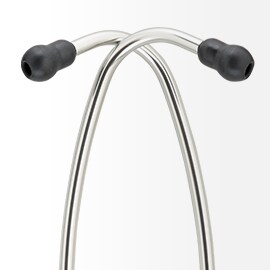
Before placing the eartips in your ears, make sure they are facing forward and away from you. (Figure A) This will ensure that the eartips are aligned with your ear canals for comfort and maximum sound transmission. Hold the eartips in front of you, with one of the tips in each hand. Pull the tips apart and place the eartips in your ears. (Figure B) If the fit is not comfortable or the acoustic performance is not sufficient to use your stethoscope properly, adjust the pressure on the ear hooks. All Littmann stethoscopes have adjustable ear hooks. Gently squeeze the ear hooks together to increase their tension. Pull them apart to decrease the tension. Improper wearing of the ear hooks (for example, with the ear tips pointing backwards, as in Figure C) can result in a poor acoustic seal and sometimes even complete blockage of sound.
A. Correct insertion
B. Correct positioning
C. Incorrect positioning
2. Use ear olives of the right size
In order to use your stethoscope correctly, the ear tips must fit as well as possible. This is the only way to achieve optimal acoustic performance. This is especially true if you use soft ear tips. All ear tips for Littmann stethoscopes are available in large and small.
3. Turn to the right side
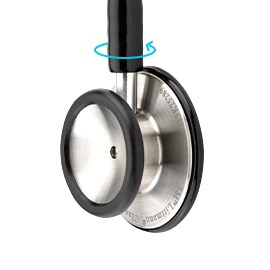
You can only use a Littmann double-ended stethoscope properly by opening (or pointing) the side you want to use—bell or diaphragm—by rotating the chestpiece. When the diaphragm is open, the bell is closed, preventing sound from entering through the bell and vice versa.
4. Remove any blockages
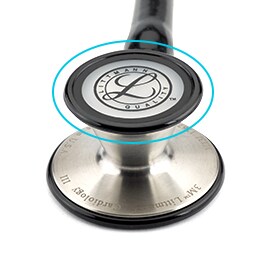
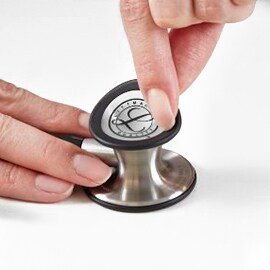
If you routinely carry your stethoscope in a case or do not clean it often, lint or dirt can build up inside the stethoscope and its components and clog the sound channel. To prevent dirt buildup, clean and maintain your stethoscope and its components regularly. If you use a 3M™ Littmann® Cardiology IV™ or Classic III™ stethoscope, keep the bell free of debris by covering it with the removable membrane.
5. Check the seal
Stethoscopes must be hermetically sealed to transmit body sounds from the patient to the practitioner's ear. Loose parts in the chest piece, loose or torn tubing, or incorrectly inserted ear tips can prevent an airtight seal.